When a baby tooth falls out, most parents don’t exactly mourn the loss. There’s usually a little excitement, maybe a photo for the grandparents, and then everyone moves on. After all, baby teeth are meant to fall out anyway, right?
Well, yes. But here’s the thing most people don’t realize: those tiny first teeth are actually doing a lot of heavy lifting behind the scenes. And taking good care of them? That matters way more than you might think.
Why Baby Teeth Aren’t Just Placeholders
You can think of baby teeth as nature’s space savers. Each one holds a spot for the permanent tooth that’s waiting underneath. If a baby tooth is lost too early, because of decay or injury, the teeth around it can shift into that empty space. And when the adult tooth is finally ready to come in? There might not be enough room left.
That can lead to crowding, crooked teeth, or even impacted teeth that struggle to break through.
Baby teeth also help your child:
- Chew food properly (which affects nutrition)
- Speak clearly (try saying “thanks” without your front teeth)
- Smile with confidence (even little kids notice how their friends react)
The Cavity Risk That Sneaks Up on Parents
Here’s what might surprise you. According to the Centers for Disease Control and Prevention, cavities are one of the most common chronic childhood conditions. And yet, so many parents assume baby teeth don’t need the same level of care as adult teeth.
That’s simply not true.
Tooth decay in young children can lead to pain, infections, trouble eating, and problems paying attention in school. And a child who grows up scared of dental visits? That fear can stick around for decades.
What Actually Works (Without the Guilt)
At Ridge Family Dental, Dr. Viktoria Sverdlov takes a gentle, no-shame approach with families. She knows that parenting is hard enough without someone making you feel bad about a forgotten tooth-brushing session.
Here are a few simple things that make a real difference:
- Start early. Even before that first tooth pops through, you can wipe your baby’s gums with a soft, damp cloth. It gets them used to having their mouth cleaned.
- Use a rice-sized smear. Once teeth appear, brush twice a day with a tiny amount of fluoride toothpaste, about the size of a grain of rice. Around age three, you can move up to a pea-sized amount.
- Skip the bedtime bottle. Putting a baby to bed with a bottle of milk or juice baths their teeth in sugar all night long. Water is fine. Milk and juice? Not so much.
- Make it fun. Let your child pick out a toothbrush with their favorite character. Brush your own teeth alongside them. Turn it into a silly song. The goal is to build the habit without turning it into a battle.
When Should a Child First See the Dentist?
The American Academy of Pediatric Dentistry recommends bringing a child in by their first birthday, or within six months of their first tooth appearing.
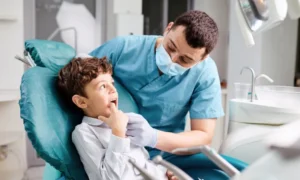
That first visit isn’t about doing a lot of work. It’s about letting your child meet Dr. Sverdlov in a low-pressure, friendly setting. They might sit in the chair, open wide for a quick peek, and leave with a sticker and a positive memory.
And that positive memory? That’s the real goal.
Because a child who grows up thinking the dentist is no big deal is way more likely to keep going as an adult.
Building a Lifetime of Healthy Smiles
You don’t have to be perfect. You just have to start. Our team at Ridge Family Dental loves helping Lyndhurst families raise kids with healthy, happy smiles. Whether it’s your little one’s very first visit or you’re just looking for a dentist who actually gets how busy life is, you’re always welcome here.
Call us at 551-272-7026 to schedule your child’s next appointment. Because every smile, no matter how small, deserves to be cared for.